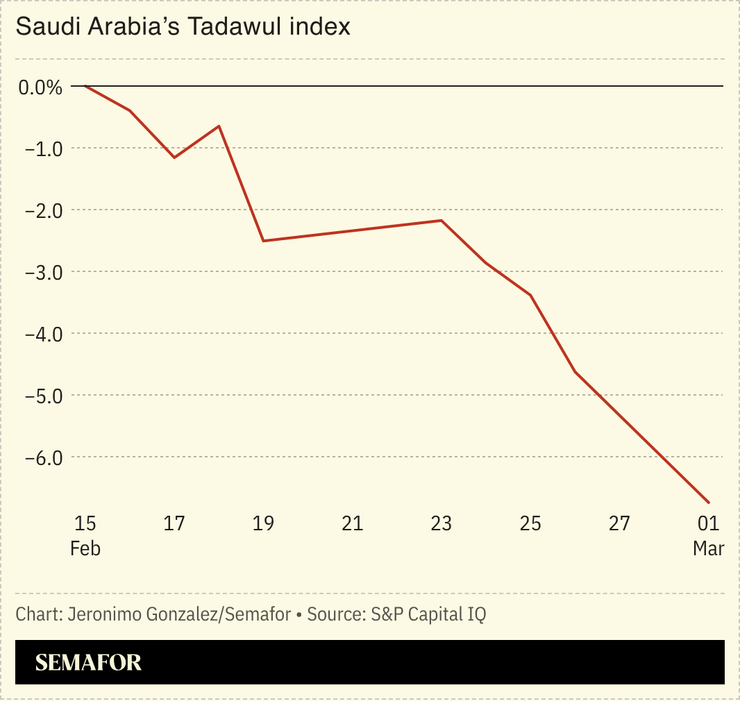
Stock markets in the Gulf slumped and oil prices are set to spike as investors digest the impacts of a barrage of Iranian strikes that have upended years of regional security and shaken markets that had seemed able to brush off geopolitical risk.
OPEC+ agreed to a larger-than-expected increase in output to mitigate the anticipated price jump, but that may still face the practical challenge of actually getting Gulf oil into global markets. A spike in oil prices is only useful if Gulf producers can safely export crude to customers, but Iran has threatened ships traversing the Strait of Hormuz chokepoint: Around 20% of global oil supply passes through the narrow waterway, not to mention the goods that also move through. Ship traffic through the Strait has plummeted.
Markets in the region that were open on Sunday dropped. The Saudi Tadawul fell by nearly 5% before paring losses, while the Oman and Bahrain bourses also slipped. Iran’s strikes on Gulf cities are a blow to the region’s goal of promoting itself as a financial center that can be a haven of stability. Gulf governments have leaned on stock markets as a way to bring in foreign investors and raise money to fuel economic diversification plans. This had been having some success, until now.