




The Signal Insight
Markets shook this week on a piece of speculative analysis of how ubiquitous AI agents could destroy jobs — and companies — at a faster rate than most observers have predicted. The acting chair of the White House Council of Economic Advisers, Pierre Yared, called the Citrini Research essay “an interesting piece of science fiction.”
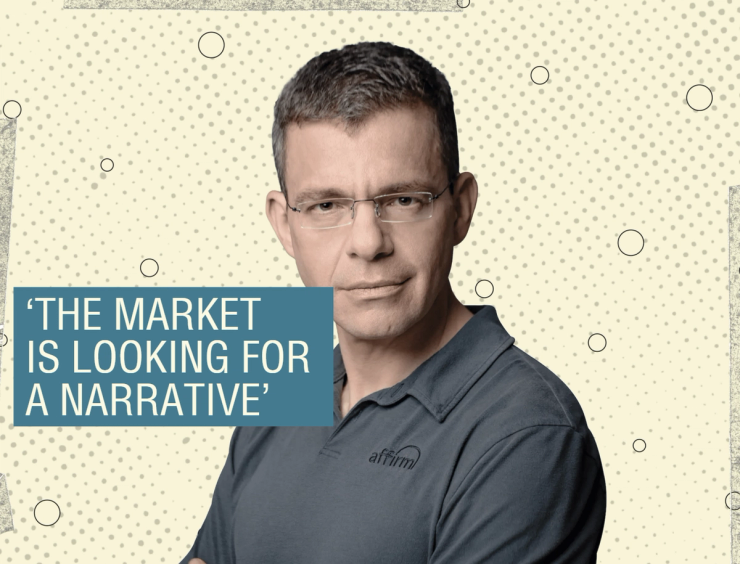
Affirm Co-founder and CEO Max Levchin, part of the “PayPal mafia” that includes Elon Musk, is a lifelong sci-fi fan who told Semafor last year that the genre “pushes your imagination” as an entrepreneur and helps executives identify what they should work on next. Reached this week, he described the Citrini report as a healthy provocation, even as he argued that investors’ reaction to it was too extreme.
Shares in Affirm, Levchin’s buy-now-pay-later business, have fallen by a third since the start of the year, as financial technology companies have been caught up in the market’s newly bearish narrative about AI’s possible impact. In an interview on Thursday, Levchin made no comment on his own company, but he argued earlier this month that the loyal customer base and distinctive consumer brand that Affirm has built since he founded it in 2012 constituted a “powerful defensive moat.”
Several analysts have echoed that argument, with Redburn saying that agentic commerce “does not change the thirst for credit” and Wells Fargo writing that the adoption of agentic commerce in Affirm’s marketplace could be gradual “as consumers take time to build trust.”
Here’s how Levchin says Citrini’s vision of the future contrasts with his own.
This interview has been edited for length and clarity.
Andrew Edgecliffe-Johnson: You’ve talked about the value that fictional visions of the future have in helping think about how to organize yourself in the present. Do you think markets right now are grabbing at a sci-fi narrative?
Max Levchin: Certainly. The reaction to the Citrini document is almost too uncannily close to that. Someone sat down and wrote a 4,000 word essay on a quasi-dystopian future, and the market said, “Oh my God, that sounds too believable. Let’s sell everything.”
You’re a connoisseur of these things. Did you enjoy this particular sci-fi narrative?
Some of it was actually very compelling. I think it was well-written and had a lot of flair to it, with some interesting sort of imaginary details thrown in. I think a fair amount of it was not actually believable, and took some liberties with what is and isn’t possible. I read it with some degree of amusement as well as surprise. But I think it’s very healthy. It’s really good to write these things so that you can sort of look into the mirror before the subject shows up.
I know markets are often driven by narratives, but not usually in quite this way. What do you think is happening?
I’ve long maintained that prediction of the middle distance is by far the most difficult thing to do. I can tell you exactly where Affirm will be 10 years from now. Telling you where Affirm will be 24 months from now is nearly impossible, because too much of it is already known and not enough is available to reason about. Ten years from now, we will have overcome all the temporary obstacles and surmounted all the necessary challenges. We might be right in the middle of surmounting one of those things two years from now. And will we be on the good side or the bad side? Nobody knows. So I think the market is looking for a narrative that says, here’s what that looks like.
I think everyone is generally in some degree of agreement that, if this whole AI future plays out as expected, we will enter this great age of abundance. But how do we get there? Well, initially there may be some challenges. That’s what this report is all about — [predicting that] two years from now, the haves and the have nots will have stretched far apart. It’s definitely not the first time people have gone through that sort of attempt to imagine the middle distance. But because no one really knows what to expect, and everyone expects the pace to be unpredictable, people went for the extremes.
I laughed out loud when I read DoorDash as [Citrini’s] example of the thing that’s going to fall apart instantaneously. Sure! And how will the assorted bouquet of competitors just randomly get themselves tens of millions of active consumers and go and beat the door to every little restaurant and get them integrated? [These are] things that took DoorDash the better part of 15 years [to acquire].
Do you think there’s something unusual about AI, or is this a cycle you’ve seen in other other technologies’ development?
I suspect it’s no different than other things. I mean, what was that [Daily Mail] headline [from 2000]? “Internet may be just a passing fad as millions give up on it.” I think that’s one example where people are just completely misreading the situation.

Notable
- Levchin built PayPal with the likes of Musk, Peter Thiel, and Reid Hoffman. These days, many of their conversations are about sci-fi novels. One highlight, he told Semafor last year, has been Iain Banks’ Culture series, about a post-scarcity society where AI is sentient and humans “change genders at will because it’s interesting.”