




Camilla’s view
Horse racing has an indelible footprint in the Arabian peninsula. Equestrianism is one of the most enduring cultural traditions, and the region’s most prominent sheikhs have long shaped European thoroughbred racing. So it was inevitable that Saudi Arabia’s renaissance would include a push into the global racing elite. And equally inevitable that it would do so with serious financial firepower.
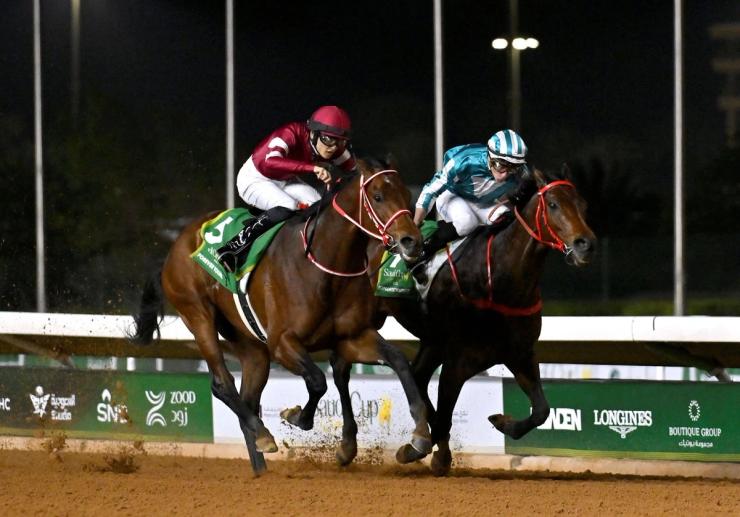
From a debut during the pandemic in 2020, the Saudi Cup has sprinted out of the stalls to claim a top spot on the international calendar. At $30 million, it supplanted the Dubai World Cup — which has a $20 million prize pool — as the world’s richest race. The two-day February meeting doubles as a high-quality international contest and an attempt to create a fixture on Riyadh’s social calendar.
But under the radar, it’s perhaps the Bahrain Turf Club that has most effectively embedded itself into the Middle East circuit, and enhanced its relevance with the British horse racing industry.
The ties binding the equine worlds of the UK and Arabia date back to year zero for the sport. Every modern thoroughbred traces lineage to three stallions imported to Britain in the late 17th century: the Darley Arabian, the Godolphin Arabian, and the Byerley Turk. Bred with stronger British mares, these thoroughbreds define the sport.
Today, the money and dirt tracks of Riyadh provide a showcase for American and Japanese contenders, while Sheikh Mohammed bin Rashid’s Godolphin outfit straddles world racing from its Meydan (UAE) and Newmarket (UK) bases. But in its fourth year, the Bahrain Turf Series — under the stewardship of Shaikh Isa bin Salman bin Hamad Al Khalifa — has opened up an easy pathway for international horses to compete, especially from UK stables more accustomed to grass than dirt.
British horse racing, renowned as the Sport of Kings, is under pressure. Prize pots have seen a precipitous decline, and those who run the sport seem always to be at war with the betting operators who pour a lot of money in. For some owners, the opportunity to compete in the fallow winter months in Bahrain has proved compelling.
Just 15 minutes from downtown Manama in Riffa, the doors to the Rashid Equestrian Club open up to unveil a circuit of perfect emerald grass, surrounded by desert. Racing takes place on Friday evenings, and some Thursdays, from October through the winter months.
Unlike the huge purses of Saudi and Dubai, Bahrain’s $1 million Turf Series targets international talent, trainers, and owners at the mid-range. The money on offer regularly attracts a who’s who of British racing. Sir Alex Ferguson has even enjoyed watching his horse win here. It’s not just a series benefitting tourist riders though. The current champion jockey is a Bahraini, Ebrahim Nader, who came up through the Bahrain Turf Club Academy.
Top British trainer George Baker stables his horses at home at Epsom Downs, practically in sight of the finish line of the 250-year-old Derby, probably still the most prestigious, if not lucrative race in the world. But proximity to the sport’s oldest traditions has not blinded him to the possibilities opening up in the Gulf. George Baker Racing has sent horses to compete annually in Bahrain since 2021.
“The Bahrain Turf Club has been clever in its approach,” Baker told me. “They’ve listened to participants and made their offering more appealing every year. From giving travel incentives for both horses and owners to the upgrade every season to their facilities. Over the four seasons of the Turf Series, the racing has become incredibly competitive.”
When I first visited in 2022, there was just a small grandstand. International visitors and owners socialized in the car parks; tailgate style, picnicking from the back of SUVs. The rest of the spectator area was teeming with Bahrainis and migrant workers. Mainly male, all transfixed by what was taking place on the turf. Scuffles have been known to break out near the track — perhaps over money changing hands in unseen corners during each race.
Now upgraded, the grandstand facilities are as good as anything in international racing. Floodlights installed at the start of last season mean that races now take place in the evening cool. Local families mingle with expats, enjoying the views, food trucks, and action. The horse racing scene is evolving to become a second sporting attraction for Bahrain, following the kingdom’s top event, the Formula 1 Grand Prix in April.
And that, perhaps, is the real story. In a region where the biggest and most expensive dominate the conversation, smaller Gulf states are still finding niches for themselves. Bahrain can’t outspend its neighbors. What it can do is identify a gap in the calendar and build a complementary competition that benefits from the megaevents around it. The approach that has made the Turf Series a success has applications across industries — targeting other forms of tourism rather than focusing solely on luxury, for example — and could help the Gulf capture more of the markets it is competing in.
Camilla Wright is a media commentator and writer for global news and pop culture outlets, and publishes Britain’s biggest and best known newsletter.

Notable
- In 1906, American political cartoonist Homer Davenport, on a mission from President Theodore Roosevelt, traveled to Aleppo, Syria, to acquire Arabian horses for a US cavalry breeding program. The 27 mares and stallions he brought back are in the bloodline of almost all the 630,000-plus registered Arabians in the US today, Jane Waldron Grutz wrote in a 2011 edition of Aramco World magazine.