




Amena’s view
As US President Donald Trump pushes US oil companies to exploit Venezuela’s oil, Libya — despite its rolling political crisis — is emerging as the more attractive destination, a clear signal of the stark challenges facing the US effort to revive Venezuelan crude.
Oil supply can’t be switched on with the turn of a tap. Building capacity takes years and, in many cases, tens of billions of dollars. That reality sits uncomfortably alongside claims from Trump that American intervention could rapidly unleash Venezuela’s vast reserves — claims that defy the economics of production on the ground.
Reserves on paper matter far less than the economics needed to turn them into production. That distinction explains why Libya consistently comes out ahead of Venezuela when companies consider long-term upstream investments. In a market where supply is ample, investment in new capacity is often dismissed. But oil companies don’t make decisions on short-term timelines. Long-term demand remains intact, and natural decline rates across existing fields mean that capacity must continuously be replaced simply to stand still.
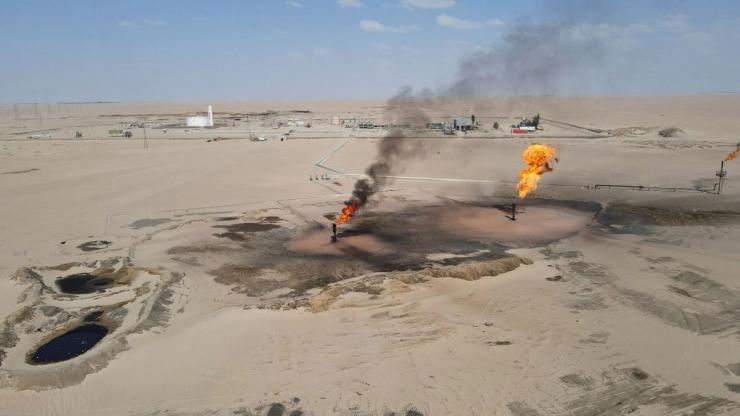
I traveled to Tripoli last weekend for a convening of international oil companies and investors seeking to assess whether the country is finally turning a corner. Libya has an attractive resource base and proximity to European markets, yet its upstream sector has long been constrained by political fragmentation, corruption, and layers of bureaucracy.
In conversations with senior executives, I posed a simple question: if you had to choose, Venezuela or Libya? The answer was consistently Libya. The reasoning was equally consistent. Venezuela’s tar-like crude can cost between $60 and $80 a barrel to produce, while production costs in Libya are typically under $10 a barrel. Infrastructure in Venezuela is severely degraded, and any meaningful revival would likely require more than $100 billion in investment over a decade. Geopolitical uncertainty — particularly with three more years of the Trump administration — further weakens the investment case.
Of course, investing in Libya isn’t straightforward. The country remains divided politically, geographically, and economically. The UN-backed Government of National Unity governs from Tripoli in the west, while a rival administration aligned with the Libyan National Army and Khalifa Haftar controls the east and much of the south. Oil exports are regularly disrupted.
Even so, momentum is increasing. Tripoli aims to boost oil production by 200,000 barrels a day to 1.6 million by the end of this year, with ambitions of reaching 2 million bpd by 2030. France’s TotalEnergies and US-based ConocoPhillips said they plan to invest $20 billion in the country. The deal would help increase the state-run National Oil Corp.’s output, but it is far from guaranteed to succeed. The international companies require the government to cover 60% of the capital expenditure, and one industry source told me that if Tripoli fails to fund it, the project will stall.
Libya is set to announce additional investors when the results of its first oil exploration bidding round in more than 17 years are revealed on Feb. 11. Massad Boulos, Trump’s senior adviser for Arab and African affairs, was in Tripoli and conveyed the president’s view that Washington sees value in a Libyan-American partnership.
Today, the last frontiers of oil investment lie in challenging environments. Investors can’t demand perfect governance, but must instead seek out opportunities where risk is visible, costs are manageable, and timelines are credible. For now, Libya fits that bill better than Venezuela.
Amena Bakr is the Head of Middle East Energy & OPEC+ research at Kpler, an independent global commodities trade intelligence company.

Notable
- Exxon Chief Executive Officer Darren Woods called Venezuela “uninvestable” in its current state. Bloomberg explains whether Trump’s plans for Venezuela’s oil are realistic.