



The News
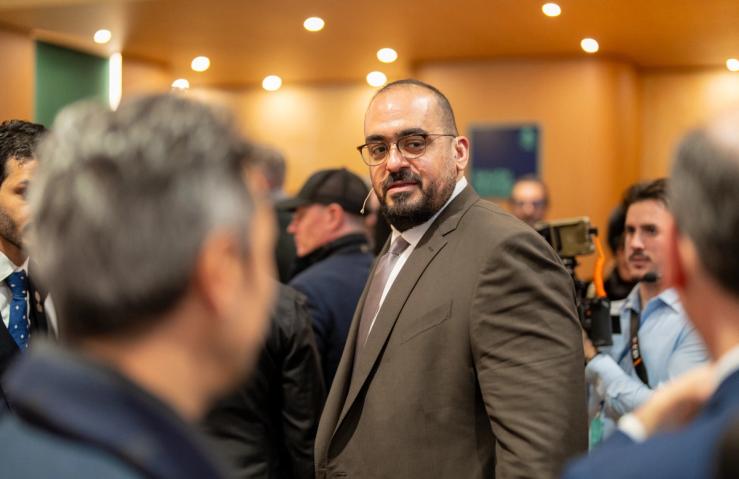
Saudi Arabia’s economy has reached new levels of independence from oil and is now letting the private sector take on a bigger role, Minister of Economy and Planning Faisal Alibrahim told Semafor at Davos.
Non-oil activities now make up around 55% of GDP, and the contribution of oil revenue to the rest of the economy has declined from 90% a decade ago to 68% now, Alibrahim said. The shift validates a decadelong effort to diversify the country’s economy under Crown Prince Mohammed bin Salman, investing in everything from renewable power to tourism to auto manufacturing.
In the past, much of that investment was state-led and financed with oil revenues. The government is now looking to further reduce how much non-oil industries depend on crude export revenues, Alibrahim said, by handing over some projects to the private sector.
The state is also shifting its spending strategy after five years of going “full throttle,” to focusing more on efficiency, he added. “It was all about catch-up” and “delivery at any cost,” Alibrahim said. “Now it’s about achieving results at the right cost.”
That is a change from the previous strategy, which focused on building expensive, ultraluxury projects aimed at grabbing headlines and attracting the world’s richest travelers. “We had in mind accepting some loss-leaders,” Alibrahim said, in reference to some of the kingdom’s most glamorous projects, which include luxury hotels on the Red Sea that can cost up to $17,000 a night.

Know More
The kingdom’s diversification drive could end up costing trillions of dollars. Funding that investment has turned Saudi Arabia into one of the largest emerging market debt issuers. The country also wants to attract $100 billion of foreign direct investment a year by 2030.
Alibrahim’s view that the kingdom is more diversified contrasts with assessments by some analysts who say the state needs oil prices to be much higher to cover its spending. Most estimates put the fiscal breakeven price at around $90 a barrel — far above the $60-a-barrel average expected this year.
Low oil prices have constrained the government’s ability to fund new projects, with officials signalling a willingness to delay or even cancel some if necessary.
One key success has been opening the country up to tourism. Investments in infrastructure and hotels are intended to make the kingdom one of the world’s most visited countries.
Saudi Arabia is also focusing on investing in artificial intelligence as part of plans to become a global leader in the technology, Alibrahim said. “We have the energy to power AI, we have the capital to scale AI, and we have the talent to work and lead in AI,” he said.

Notable
- Saudi Arabia’s plan to narrow this year’s budget deficit will rely on a rebound in oil prices and tight control of spending, Tim Callen writes for the Arab Gulf States Institute.