




Matthew’s view
Not long ago, the Davos crowd thought about the Gulf only when they needed cash or worried about conflicts in the Middle East. Those days are gone.
The Gulf is increasingly using the annual conference to its advantage, convincing the global elite that the region isn’t a place merely to look for money, but one where they should invest.
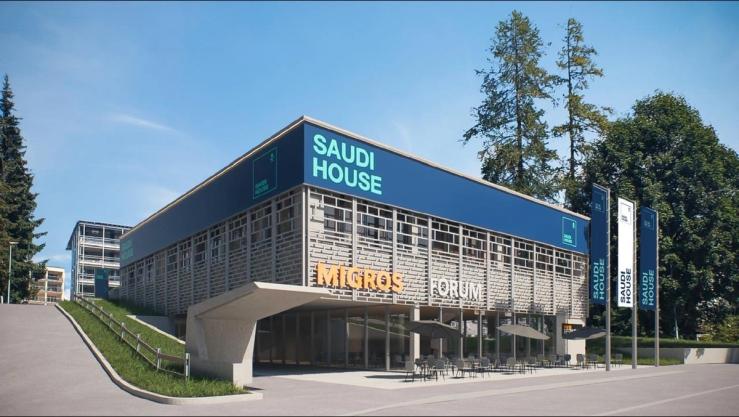
Saudi Arabia seems to have the Gulf’s biggest delegation in Switzerland, pitching itself as a connector across energy markets, capital flows, data infrastructure, and diplomacy. Perhaps more than any other country in the region, its future depends on persuading global leaders and executives that they should be investing in the kingdom.
The government recognizes that it can’t reshape its economy alone, and even its huge financial resources have limits. Speaking at Saudi House, Minister of Economy and Planning Faisal al Ibrahim said that “delivery at any cost” was justified when the country needed to catch up, but should now shift to a more rationalized approach.
This doesn’t mean the era of large foreign investments is over. Saudi Arabia is still able to hold sway over global dealmaking when it wants to, as its sovereign wealth fund’s takeover of the video games-maker Electronic Arts illustrated.
Qatar and the UAE are also making their case at Davos, entertaining pitches and encouraging their international partners to set up shop in Doha or Abu Dhabi. Those cities — like Riyadh — also want to attract investors and be seen as travel hubs, financial centers, and AI powerhouses.
For CEOs looking for new markets to expand into, or bankers looking for who can finance the next big M&A deal, the Gulf “houses” in Davos can’t be ignored.

Notable
- Though finance, economic development, and technology are the top commercial priorities for Gulf nations at Davos, regional geopolitics are the bigger concern, Semafor’s Mohammed Sergie wrote in a column.