


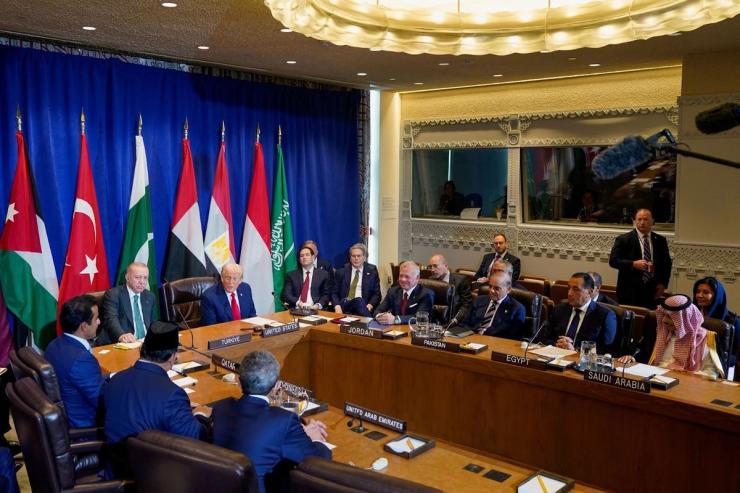
Three Gulf countries, along with Israel and Türkiye, appear to have helped convince Washington to step back from attacking Iran. Oman, Qatar, and Saudi Arabia reportedly urged deescalation and a return to talks, warning that bombing Iran wouldn’t topple the government but could spark a regional conflict. US President Donald Trump has now softened his stance while still ordering the military to put assets in place.
Iran’s protest crackdown — which analysts say was the deadliest in the Islamic Republic’s history — has created a dilemma for Gulf powers. Few countries have sympathy for Tehran, yet all are concerned about the repercussions if the regime there collapsed. For now the disruptions have been limited to air traffic diversions, as well as 25% secondary tariffs by the US on Iran’s trading partners, with the UAE most affected. Iran retains economic links to Gulf commercial hubs, as seen when the US Treasury Department on Thursday sanctioned six UAE-based companies involved in “shadow banking networks that allow Iran’s elite to steal and launder revenue generated by the country’s natural resources.”
And while US strikes appear to be off, for now, Iran’s leadership is facing a set of internal challenges that are ingredients for a revolution, meaning any quietening on the streets could be short-lived, according to Iran expert Karim Sadjadpour.