




Jason’s view
For decades, Tehran learned to treat American warnings as flexible. Lines could be tested, reinterpreted, or ignored. That approach does not work with US President Donald Trump. By now, it should be unmistakably clear to Iran’s leadership, and to other hostile regimes, that applying that logic today would be a potentially catastrophic miscalculation.
Consider Venezuela. Nicolás Maduro had long been accused of facilitating large-scale narcotics trafficking into the United States, with grave consequences for American security and public health. He assumed defiance would be met with rhetorical condemnation rather than real consequences. He was wrong. Trump did not issue symbolic warnings or negotiate against himself. He translated US security priorities into action, culminating in Maduro’s capture and the pursuit of criminal accountability on drug and weapons charges.
The lesson is simple and broadly applicable. When a regime’s conduct threatens American interests, whether through narcotics trafficking, weapons proliferation, terrorism, or the export of instability beyond its borders, Trump will act.
While Trump’s recent foreign-policy emphasis has focused on the Western Hemisphere, his guiding principle is the defense of American interests wherever they are threatened. Venezuela is a signal that erosion of American security and strategic interests will no longer be tolerated, regardless of where it originates.
That logic applies to the Middle East. Trump’s December meeting with Israeli Prime Minister Benjamin Netanyahu removed any remaining ambiguity regarding the Iranian regime. If Tehran seeks to rebuild its nuclear infrastructure or reconstitute its missile capabilities, military action is once again on the table. Not as political theater, but as a real and enforceable consequence.
Trump has established a record of acting when he draws lines. He views the June conflict with Iran — short, focused, and devastating to its strategic military assets — as proof that decisive and limited force can restore balance rather than prolong instability. In his view, hesitation invites escalation. Clear consequences reduce it. Diplomacy is preferable, but diplomacy without credibility is meaningless.
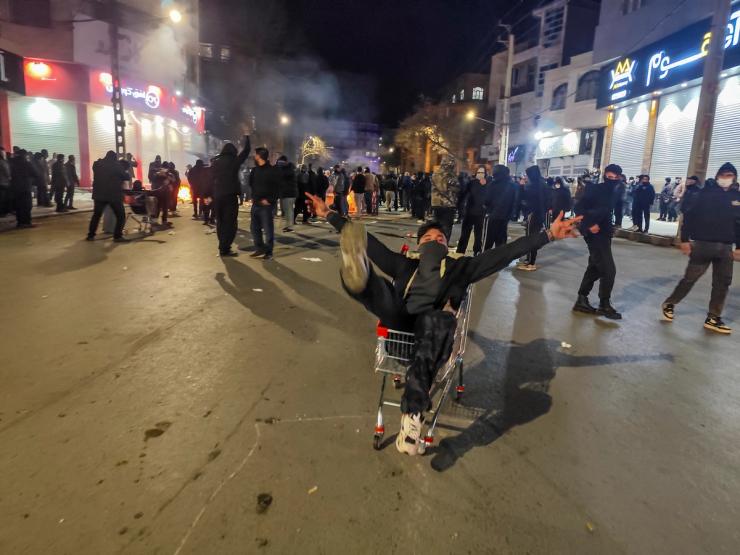
As protests have spread across Iran, Trump warned that if Iranian security forces kill civilians, the United States will “hit them very hard.” It was a direct warning that internal repression, not just external aggression, may now carry tangible consequences.
What separates Trump from many of his predecessors is not an appetite for war, but a refusal to tolerate endless gray zones. His worldview is not anti-Iranian or anti-Venezuelan. It is anti-destabilization. That applies equally to nuclear brinkmanship in the Middle East and narco-state behavior in the Western Hemisphere that corrodes security at home and abroad.
The Iranian regime should also understand that Trump is not only an unapologetic ally of Israel; he is equally committed to America’s key Arab partners, including Saudi Arabia, the UAE, Qatar, and others. These nations are pursuing national visions rooted in stability, growth, and regional integration. Trump believes that ordinary people across countries, including Iranians, Venezuelans, and Cubans, share the same aspirations: economic opportunity, security for their families, and a future not defined by permanent crisis. He believes they deserve the opportunity to achieve them.
That is why Trump’s December warning to the Iranian regime, reinforced by recent actions in Venezuela and unfolding events inside Iran itself, should resonate powerfully in Tehran and other capitals that threaten US interests.
Trump has signaled he would support, and if necessary, authorize, further strikes on Iran. Not to humiliate Tehran. Not to occupy it. But to stop a trajectory that risks a far larger and more destructive conflict.
At the same time, Trump has left the door open. He has said plainly that he prefers a deal. Iranian officials have spoken of negotiations “in a spirit of respect.” That spirit still exists. But as Maduro learned, it will not survive duplicity or delay designed to run out the clock.
With the Iranian regime facing major internal unrest, its leadership must make a choice. Negotiation over provocation. Rebuilding an economy over rebuilding centrifuges or sustaining criminal enterprises. Legitimacy over confrontation. The alternative: swift enforcement of clearly defined red lines. With Trump, the age of ambiguity is over.
Jason D. Greenblatt was the White House Middle East envoy in the first Trump administration.
He is the author of In the Path of Abraham: How Donald Trump Made Peace in the Middle East and founder of Abraham Venture LLC.

Notable
- Iran’s leader Ayatollah Ali Khamenei said the government wouldn’t “back down” to protests trying to “please” Trump, The New York Times reports.
- Iranians on the streets have added a new chant to their anti-regime repertoire, calling for the return of Pahlavi, the son of the late Shah who was overthrown in 1979, the BBC reports.