




Mohammed’s view
Gulf countries and Venezuela share a geological bond, with both sitting on huge oil reserves, but the US capture of Nicolás Maduro has almost no impact on the region — at least not directly, and certainly not for now.
OPEC members in the region and Qatar (which left the cartel in 2019) regularly interacted with energy policy counterparts in Caracas, and Doha has played a role as mediator at times, but Venezuela’s focus in the region has been at odds with Gulf desires of containing Iran and its proxies. The region will appreciate a more US-oriented Venezuela, as long as its oil policy continues to serve Gulf interests at OPEC.
Oman and Qatar issued statements of concern over “developments related to the Bolivarian Republic of Venezuela,” without mentioning Maduro or the US. Bahrain, Kuwait, Saudi Arabia, and the UAE haven’t commented yet. The statements and the lack thereof, in addition to the muted reaction in oil markets, show that developments there aren’t a major concern. While the “trajectory for oil production” in Venezuela is “highly uncertain” in the long term, the removal of Maduro will not “materially impact oil market balances in the short term,” according to Edward Bell, the chief economist at Dubai-based bank Emirates NBD.
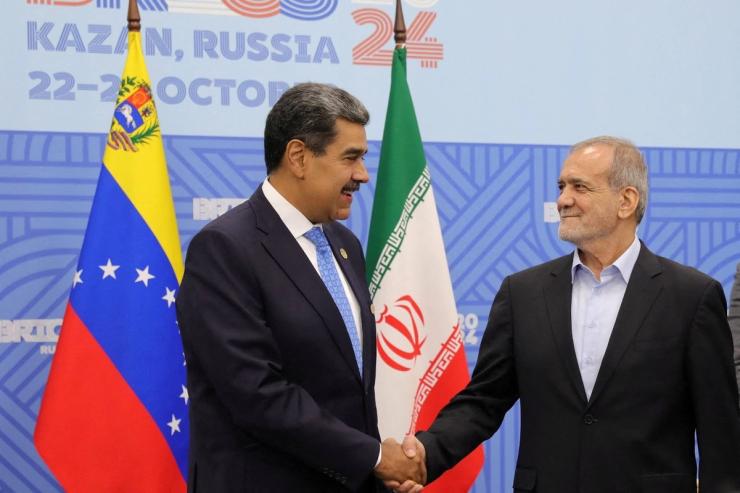
The developments — to borrow the diplomatic phrase — are, however, a concern in Tehran, which has close ties to Maduro and has also clashed with Washington over the past two decades. President Donald Trump said on Friday that the US is “locked and loaded,” ready to come to the aid of Iranian protesters if the regime starts murdering them. With the extraction of Maduro over the weekend, Trump’s threats are surely carrying new weight in Tehran.

Notable
- The arrest of Venezuelan leader Nicolás Maduro is raising uncertainty in Tehran around how far Trump is “willing to go” help Iranian protesters, The Wall Street Journal reported.