




David’s view
Candidates who think they’ve escaped or explained their pasts keep having to explain comments that “resurface” online, again and again.
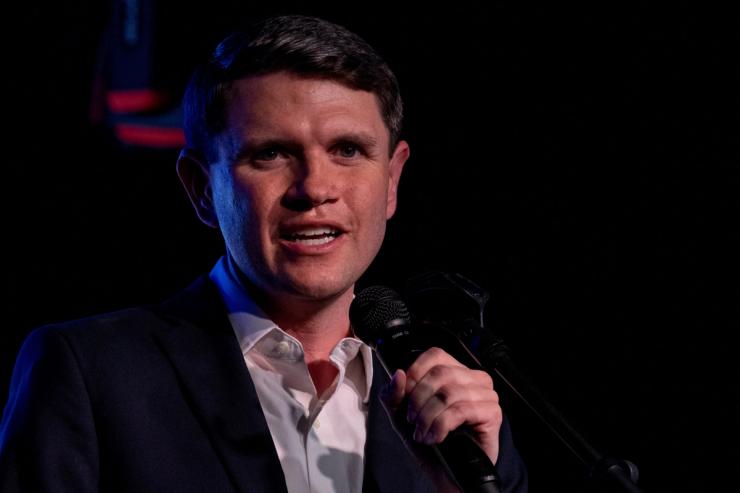
Video of Texas Democratic Senate nominee James Talarico rejecting “tough on crime” policies in 2020 recently “resurfaced,” according to Fox News. More video of Talarico later “resurfaced,” this time of him thanking activists who drew the “link between climate change and white supremacy and capitalism.”
He had company when tweets about 9/11, written and then deleted by Michigan Democratic Senate nominee Abdul El-Sayed, “resurfaced” in the New York Post.
Republicans are not immune to this phenomenon. Peter Oberacker, a New York state senator running for Congress, watched his party cancel ad reservations after a “resurfaced 2015 Veterans Day Facebook post” appeared in Politico, honoring a grandfather who fought on the wrong side of World War II. Colorado gubernatorial nominee Victor Marx’s tale of a meeting with Satan happened many years ago; it “resurfaced” this week, via a podcast he recorded in 2020.
“Resurfacing” is more than a shortcut for political reporters to explain why they’re serving up something old to their audience. It reflects the way so much of our modern discourse is made — by journalists and operatives skimming the waters of social media, noodling out content that long ago stopped getting delivered in a linear form.
The overall progression here is familiar to anyone who read Douglas Rushkoff identifying and diagnosing the “narrative collapse” when Vine was young, TikTok hadn’t been founded, and most YouTube creators weren’t getting paid. Interesting information no longer needs to be part of a larger story; it now lives untethered to news or the news cycle.
The logic is simple: Every online platform is built to keep the user connected, which means getting emotional reactions, which means that the most aggravating material plays best, regardless of when it dates back to. Witness the people reacting to movie clips as if they’re documentaries and the popularity of YouTube channels that rank and reorder old pop culture.
Political campaigns have always combed a candidate’s old statements and clips for material to be used against them. It’s so standard, and traditional media has given up so much turf, that voters sometimes see work that a reporter dug up on his own and assume it was “opposition research.” But “resurfaced” information doesn’t need to be obscure. Campaigns I’ve covered this year have been forced to respond to clips turned up by candidates’ friends or family — long after the problems were perceived as resolved.
An old-fashioned news desk might cover a clip once, ask the candidate about it, and then consider the story over. News consumers today, surfing the slurry of free information on their phones and browsers, are constantly being shocked by the old.This has been a factor in Texas, where Democrats quickly identified the clips that Republicans would use against Talarico. He’d claimed that there were six biological sexes and that God was “nonbinary” during 2021 debates about gender legislation in the state.
When Talarico won his March primary, the clips were shared again on social media. Yes, the word used was “resurfacing.” Weeks later, after Texas Attorney General Ken Paxton won the GOP primary, they “resurfaced” again, this time getting a full explanation from the Democrat. Not that it would prevent them popping up again.
How does a modern candidate get past the resurfaced clips? I got different answers from the strategists I talked to, none of them definitive. One piece of advice was to build a robust social media rapid-response network that could act quickly when something bad was “resurfacing” — firing back with the context, or maybe a fuller clip.
Yet in practice, that’s not so easy to build. Candidates with younger, online native support had the advantage. In Michigan, Democratic Rep. Haley Stevens never lived down the clip of her telling Jewish voters that she sees “Israel in my dreams,” despite explaining it many times to reporters.
One strategist even recalled getting asked, in the final days of the Senate primary, why Stevens was using that clip as her closing message. (It was nearly three years old, and never shared by the campaign.)
Another piece of advice: Put more candidates on Fox News, fighting content with content. Campaigns are naturally resistant to feeding a controversy, especially if they feel it’s been dealt with before. But they’re in competition with themselves now — and when future attack ads can time travel, an aggressive approach is needed.

Notable
- The resurfacing game is especially tough on candidates with scant national profiles, like Florida’s Angie Nixon, whose videos advocating left-wing causes were re-shared as soon as she won the Democrats’ Senate nomination.
- Resurfacing has its uses, like when politicians don’t have great explanations about why their positions have completely changed. In May, Gov. Greg Abbott denounced Austin, the bête noire of every Texas conservative, for not using Flock cameras that could have aided in catching a mass shooter.